
Presuming competence. Expanding possibility. Driving change.
About the Spelling Alliance of Ireland
The Spelling Alliance of Ireland is a national, speller-led organisation supporting nonspeaking and unreliably speaking people who use spelling as a means of communication. We work so that every person who has been assumed silent has a way to be heard — and a say in the decisions that shape their life.
Why we exist
Across Ireland, nonspeaking and unreliably speaking people are still routinely underestimated. Where speech is absent or unreliable, understanding is too often assumed to be absent as well.
The consequences follow a person for life: limited education, limited expectations, limited choice, and decisions made by others about a life they never got to describe in their own words.
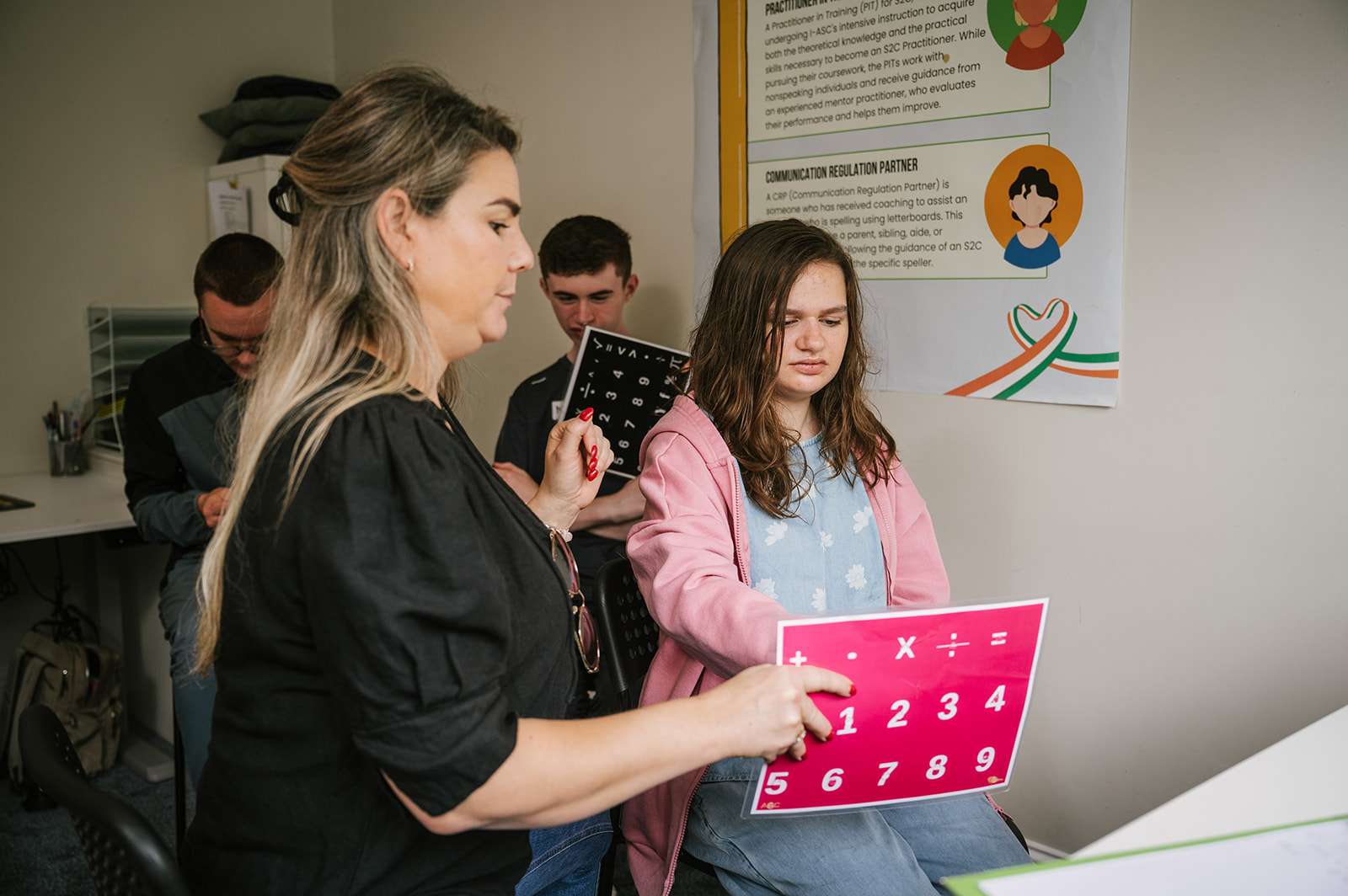
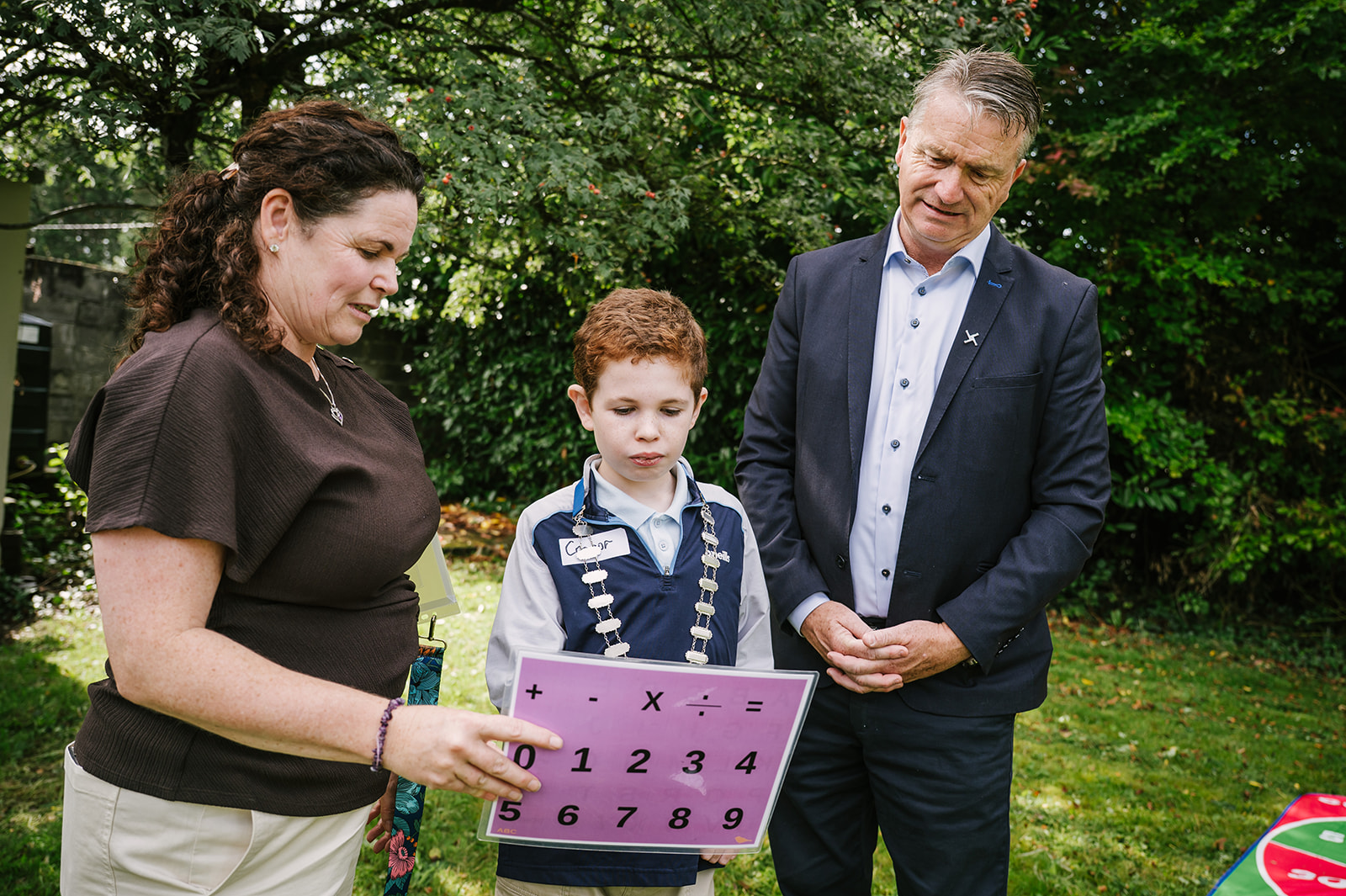
Spelling offers another route. With the right support, people who cannot rely on speech can point or type to letters and say exactly what they mean. The Alliance exists to make that route understood, available and respected across the country.
“Speech is not a measure of intelligence.”
Who we are
The Alliance brings together spellers, families, practitioners and allies in one national organisation.
Spellers set the direction. Families bring the day-to-day reality of seeking support in Ireland. Practitioners bring skill, rigour and a commitment to careful practice. Allies — in education, health, research, the arts and public life — help open the doors.
We are not a service provider and we are not a clinic. We are a shared platform: a place to build standards, share knowledge, and speak with one credible voice.

What we believe
Six principles guide every position we take and every piece of work we do.
Presume competence
We begin from the assumption that there is a thinking, capable person present — always, and without requiring proof.
Communication is a right
Access to a reliable means of communication is not a therapy goal or a privilege. It is a basic human right.
Nonspeaking people should lead
Spellers are the authority on their own lives. Their leadership shapes our priorities, our positions and our work.
Access creates opportunity
When people can communicate, education, work, friendship and self-determination become possible.
Expectations matter
Low expectations close doors long before ability ever does. High expectations, held consistently, change lives.
Change must be systemic
Individual progress is not enough. Services, schools and policy must change so that access is the norm, not the exception.
Speller leadership
Nothing about spellers without spellers
The Speller Advisory Council is the leadership body at the centre of the Alliance. Its members are nonspeaking and unreliably speaking people who communicate by spelling.
The Council sets priorities, reviews our public positions and holds the organisation to account. Its role is not advisory in name only: where spellers and the organisation disagree, the Council's view carries weight.
This is what speller-led means in practice. Decisions about the lives of nonspeaking people are made with nonspeaking people in the room.
How we are governed
The Spelling Alliance of Ireland is an independent Irish not-for-profit, established as a Company Limited by Guarantee.
The organisation is governed by a Board of Directors, which holds responsibility for strategy, finance, compliance and safeguarding. The Board works in structured partnership with the Speller Advisory Council: the Council's priorities inform the Board's agenda, and the Board is accountable for how those priorities are carried forward.
Our governing documents and reporting will be published on this website as the organisation is formally established.
A different future is possible
One where communication is expected, competence is presumed, and nonspeaking people are heard on their own terms.